There is a youtube video supporting this blog https://www.youtube.com/watch?v=G4nt6YnTK98&feature=youtu.be
The ability of the brain to hold different levels of attention to the whole body when moving.
Divided attention is where the brain is able to be paying attention to various body parts in order to control balance and movement.
It is a term which I’ve mentioned in previous blogs. I want to explain what I mean by this, and how you can use it as an exercise to improve your own and other people’s patterns of movement.
To understand human movement fully we need to explore what happens within the sensory brain and how it pays attention to each body part during movement.
What is it paying deep attention to? and, how is it maintaining connection with seemingly less active body areas and how it switches this?
Exercise for exploration:
To help your patients to hold attention off various body parts when moving.
Stand, feet comfortably apart, and take a very small, very slow, step forward and back with your right foot. Repeat. As you do so I want you to notice which areas of your body is your brain paying most attention to.
Then, alter this by varying where you are paying most attention. First pay deep attention to the foot you’re standing on (left foot) and then the foot that you are stepping (Right foot).
Progress the exercise by paying direct attention to your left knee, your left hip, your pelvis, right hip, right knee right foot and then more distant areas, abdomen, thorax, head, individual shoulders, left arm, right arm.
The ideal:
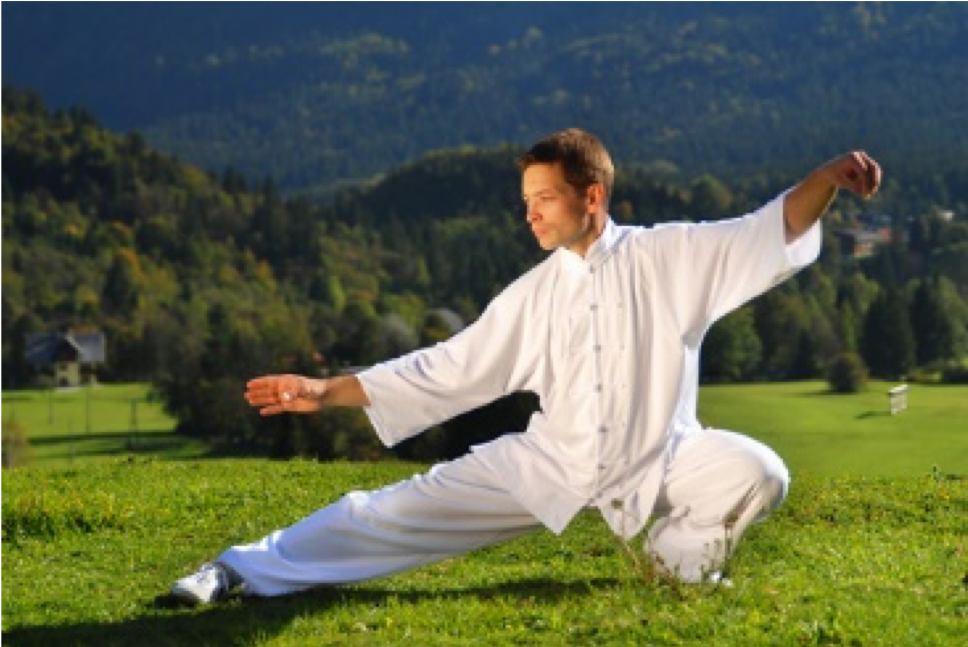
In someone who has a developed sense of their own body and how to move it (such as someone who practices tai chi, yoga or embodiment), there is an expert innate sense of place of: stability, mobility, access to strength, free range of movement and balance.
They are able to divide (and switch) levels of attention between different body parts at the most appropriate levels and time to achieve the most efficient, free flowing way of moving.
It is the epitome of efficient, effective, injury free movement.
When impaired:
For those people who do not move frequently or have some kind of neurological or musculoskeletal deficiency the ability to have balanced, appropriate attention throughout the body when moving is often ‘off kilter’.
For example, paying too much for attention to a knee that could potentially give pain or become unstable, or, post stroke, switching attention off from the stroke affected side when it isn’t paying a key role in the movement, such as during stance phase, or simply, when standing, allowing that leg to relax and ‘switch off’.
Let’s go back to the simple stepping exercise, now, notice:
Where is your point of stability?
Where is your point of mobility?
What needs to be strong and balanced?
What needs to be relaxed and open?
What happens when you change your point of attention from your knee and ankle to your pelvis abdomen and thorax?
What happens when you consciously relax your shoulders?
What happens when you alter the speed and the distance that you are stepping?
If you have a “weak” or injured side can you mirror the attention which is paid to the “good“ side when doing the same movement?
Play with this in everyday movement and when exercising or playing your sport.
Physiotherapy Exercise
I use this during physiotherapy sessions, educating my patients about divided attention, asking them to notice when areas have lost attention or when they are paying too much attention to a body part from fear of falling or pain. This causes tension and loss of ability to move freely and impedes balance.
In stroke patients or those with reduced sensory feedback (such as multiple sclerosis) can they maintain attention to the affected area when concentrating on another body part?
For further, more in depth explanation and exploration see my website for latest education offers /https://www.neuro-physiotherapist.co.uk/education/